Auditorium Experts
by auditoriumworks
Jul 08, 2026


A well-designed auditorium should allow every audience member to clearly hear a speaker, presenter, performer, or musician regardless of where they are seated. Unfortunately, many auditoriums struggle to achieve this objective due to inadequate acoustic planning, unsuitable interior finishes, or changing usage requirements over time.
While advanced sound systems often receive the most attention during upgrades, the reality is that even the best audio equipment cannot fully compensate for poor room acoustics.
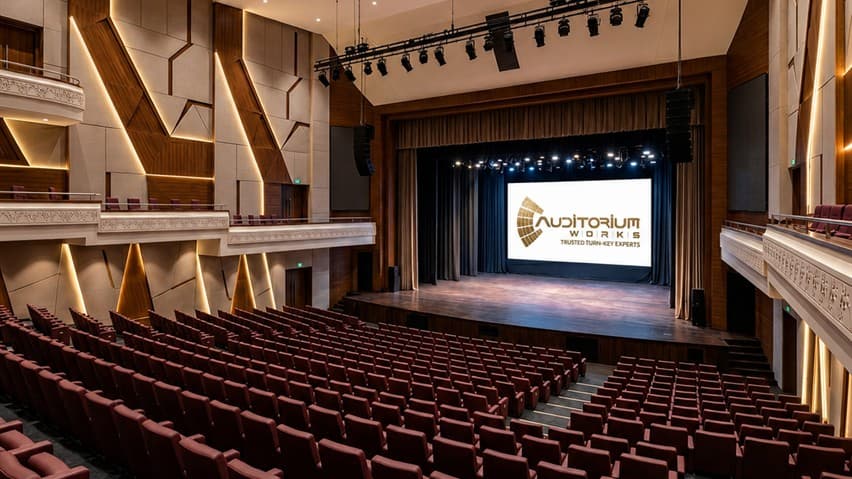
In this case study, we explore how a large auditorium facing significant acoustic challenges was transformed through the implementation of custom acoustic panel solutions. The project demonstrates how targeted acoustic interventions can dramatically improve speech clarity, audience comfort, and overall venue performance without major structural modifications.
Project Overview
The project involved a multi-purpose auditorium designed to accommodate educational events, seminars, cultural performances, annual functions, presentations, and community gatherings.
Although the venue featured modern seating, stage infrastructure, and audiovisual equipment, users consistently reported acoustic problems during events.
Common complaints included:
Despite several attempts to adjust sound system settings, the underlying problems remained unresolved.
A detailed acoustic assessment was commissioned to identify the root causes and recommend practical solutions.
Initial Acoustic Assessment
The first step involved a comprehensive evaluation of the auditorium’s acoustic environment.
The assessment revealed several contributing factors:
Excessive Reverberation
Large reflective surfaces on walls and ceilings were causing sound reflections to persist for extended periods.
This excessive reverberation reduced speech intelligibility and caused spoken words to overlap.
Untreated Rear Wall Reflections
Strong reflections from the rear wall were returning toward the audience, creating delayed sound arrivals and reducing clarity.
Hard Interior Finishes
The auditorium featured extensive use of materials such as painted gypsum surfaces, polished flooring, and decorative wall finishes with minimal acoustic absorption.
While visually appealing, these finishes contributed to reflection buildup.
Imbalanced Sound Field
Some audience areas experienced strong reflections while others received less direct sound energy, resulting in inconsistent listening conditions throughout the hall.
Understanding the Acoustic Objectives
Before recommending solutions, clear project goals were established.
The primary objectives included:
These objectives helped guide the development of a targeted acoustic treatment strategy.
Why Standard Acoustic Panels Were Not Enough
Many auditorium projects rely on generic acoustic products without considering the specific characteristics of the venue.
In this case, a standard panel solution would not adequately address the acoustic challenges because different areas of the auditorium required different treatment approaches.
Acoustic modeling revealed that reflection patterns varied significantly across the room.
As a result, a customized solution was required to achieve optimal performance.
Rather than simply adding panels uniformly throughout the venue, treatments were designed based on reflection behavior, audience coverage requirements, and architectural constraints.
Designing the Custom Acoustic Panel Solution
Following acoustic analysis, a custom treatment strategy was developed.
The design incorporated multiple acoustic panel configurations tailored to different parts of the auditorium.
Side Wall Acoustic Panels
Custom fabric-wrapped acoustic panels were installed along key reflection zones on the side walls.
These panels were positioned to intercept early reflections that were reducing speech clarity.
Their placement was carefully coordinated with seating layouts and architectural elements.
Rear Wall Acoustic Treatment
Special attention was given to the rear wall, which was identified as a major source of problematic reflections.
A combination of absorptive and diffusive treatments was used to control reflected sound energy while maintaining acoustic balance.
Ceiling Acoustic Enhancements
Selected ceiling areas received additional acoustic treatment to reduce excessive reflection buildup and improve sound distribution throughout the venue.
These interventions helped support both speech and performance applications.
Architectural Integration
A key project requirement was maintaining the visual appearance of the auditorium.
Custom panel finishes were selected to complement the existing interior design, ensuring that acoustic improvements enhanced rather than disrupted the architectural aesthetic.
Material Selection Process
Choosing the right materials was critical to project success.
Several factors were considered during selection:
The final solution utilized high-performance acoustic core materials combined with custom-fabric finishes designed specifically for auditorium environments.
This approach provided both acoustic effectiveness and aesthetic flexibility.
Installation Challenges and Solutions
As with many renovation projects, installation presented several practical challenges.
The auditorium remained operational for portions of the project timeline, requiring careful scheduling to minimize disruption.
Additionally, existing architectural features limited available treatment locations in certain areas.
Close coordination between designers, contractors, and installation teams ensured that acoustic objectives were achieved without affecting venue operations or visual consistency.
Proper detailing and installation quality played an important role in maximizing system performance.
Results After Implementation
Following installation, acoustic measurements and user feedback demonstrated significant improvements.
Improved Speech Intelligibility
Speakers could be understood more clearly throughout the auditorium, including rear seating sections that had previously experienced comprehension difficulties.
Reduced Reverberation
Excessive sound persistence was significantly reduced, creating a cleaner and more controlled acoustic environment.
Better Audience Experience
Attendees reported improved listening comfort during presentations, conferences, and performances.
The reduction in listening fatigue was particularly noticeable during long-duration events.
Enhanced Sound System Performance
Because the room itself was acoustically improved, the existing sound system operated more effectively.
Audio levels could be reduced while maintaining clarity, improving overall system efficiency.
Consistent Acoustic Coverage
Sound quality became more uniform across the audience area, providing a more balanced listening experience for all attendees.
Key Lessons from the Project
Several important lessons emerged from this auditorium transformation.
Acoustics Should Be Planned Early
Many of the original challenges could have been avoided if acoustic considerations had been incorporated during the initial design phase.
Sound Systems Cannot Solve Every Problem
Audio equipment performs best when supported by appropriate room acoustics.
Acoustic treatment and sound system design must work together.
Custom Solutions Deliver Better Results
Every auditorium has unique acoustic characteristics.
Tailored solutions often outperform generic treatments because they address specific project requirements.
Aesthetics and Performance Can Coexist
Modern acoustic treatments can enhance acoustic performance without compromising architectural design objectives.
Why Custom Acoustic Panels Are Effective
Custom acoustic panels offer several advantages compared to standard products.
They can be designed to:
This flexibility makes them particularly valuable in auditoriums, theaters, lecture halls, and performance venues where acoustic requirements are complex.
Applications Beyond Auditoriums
Although this case study focuses on an auditorium project, similar acoustic principles apply to many other environments.
Custom acoustic panel solutions are frequently used in:
In each case, proper acoustic planning contributes to improved communication, comfort, and user experience.
Conclusion
This project demonstrates that effective acoustic improvements do not always require major structural renovations or expensive technology upgrades.
By carefully analyzing the acoustic challenges, identifying problematic reflection patterns, and implementing custom acoustic panel solutions, the auditorium was transformed into a more comfortable, intelligible, and versatile venue.
The results highlight the importance of integrating acoustic expertise into auditorium projects and reinforce the value of customized solutions tailored to the unique characteristics of each space.
For architects, institutions, venue operators, and project owners, investing in professional acoustic design can significantly enhance both the performance and long-term value of an auditorium.
Frequently Asked Questions (FAQ)
What are custom acoustic panels?
Custom acoustic panels are specially designed sound-absorbing treatments developed to meet specific acoustic and architectural requirements.
How do acoustic panels improve auditoriums?
They reduce unwanted reflections, control reverberation, improve speech clarity, and enhance audience listening comfort.
Can acoustic panels improve an existing auditorium?
Yes. Many acoustic problems can be significantly reduced through properly designed acoustic treatment solutions.
What is the biggest benefit of custom acoustic panels?
They address project-specific acoustic challenges while maintaining aesthetic consistency.
Do acoustic panels replace sound systems?
No. Acoustic panels improve room acoustics, while sound systems distribute audio throughout the venue.
How are acoustic panels selected for an auditorium?
Selection depends on room size, acoustic objectives, reverberation requirements, architectural design, and intended use.
Can acoustic panels be integrated into existing interiors?
Yes. Modern acoustic panels are available in numerous finishes and can be customized to match interior design themes.
When should acoustic consultants be involved?
Ideally during the planning and design stages, although they can also assist with renovation and upgrade projects.
Contact Auditorium Works
Planning a new auditorium, renovating an existing venue, or experiencing acoustic challenges in your facility?
Our team specializes in auditorium planning, acoustic consulting, custom acoustic panel systems, soundproofing solutions, stage infrastructure, seating layouts, and turnkey auditorium execution.
Phone: +91 90150 60000
Email: auditoriumworks@gmail.com
Contact us today to discuss your project and discover how custom acoustic solutions can transform the performance, comfort, and user experience of your auditorium.
Speak directly with our turnkey engineering team for acoustic design, stage lighting specifications, BOQ estimation, and turnkey delivery.
Auditorium Works delivers turnkey auditorium planning, consulting, engineering, and execution. We integrate acoustics, AV systems, stage lighting, machinery, seating, and interiors into one coordinated delivery path from concept to commissioning.
Share Your Query